
Curbless Shower Cost: What Homeowners Should Budget
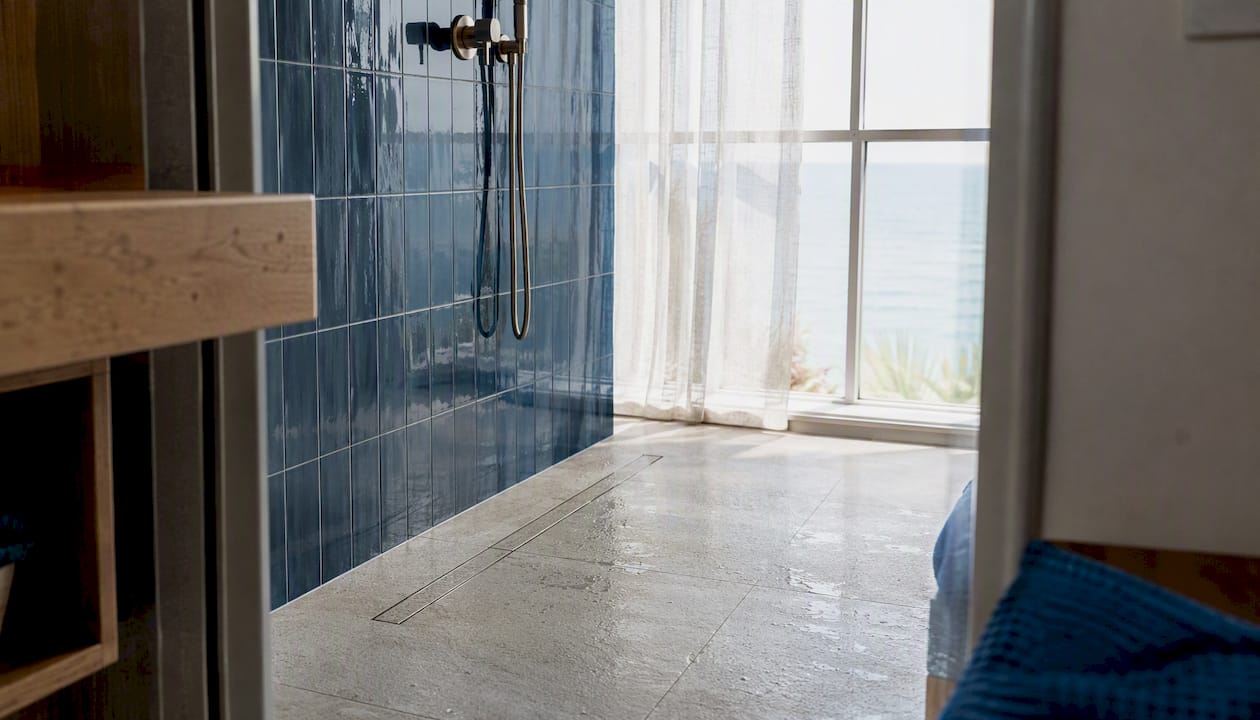
Expect to pay $8,000–$20,000 installed for a typical curbless shower in the U.S., with most mid-range projects landing around $10,000–$15,000 according to national cost data. That’s roughly $3,000–$8,000 more than a comparable curbed shower, a premium driven by three things: the floor has to be recessed or built up to create a proper slope, the waterproofing system has to extend much further, and a linear or specialty drain adds both hardware and plumbing labor costs.
On the low end, a basic prefab-pan curbless install can come in near $5,000–$8,000. Luxury spa-style projects with custom tile, frameless glass, and a relocated drain regularly hit $18,000–$35,000 or more. The gap between those numbers isn’t arbitrary — it traces directly to the components covered below.
Key Takeaways
A curbless shower typically costs $8,000–$20,000 installed in the U.S., with the curbless-specific premium running $3,000–$8,000 over a comparable curbed shower depending on floor work, drain type, and waterproofing scope.
Point | Details |
Typical installed range | Most U.S. curbless showers cost $8,000–$20,000; mid-range projects average $10,000–$15,000. |
Primary cost drivers | Floor recessing, waterproofing membrane, linear drain, and skilled labor drive the majority of the premium. |
Contractor red flag | Any quote without a named waterproofing system or a line-item breakdown deserves a follow-up question. |
Best savings lever | Keeping the drain in place and using a prefab pan can reduce cost by $1,500–$3,000 without sacrificing function. |
Coastalhrli recommendation | Coastal Home Renovations provides line-item quotes with named waterproofing systems for Suffolk County curbless projects. |
Table of Contents
How much does a curbless shower cost, broken down by component?
What do low-, mid-, and high-end curbless shower projects actually cost?
What should you ask contractors before hiring for a curbless shower?
How Coastal Home Renovations estimates curbless showers in Suffolk County
What most homeowners get wrong about curbless shower budgets
Ready to get a real quote for your curbless shower in Suffolk County?
How much does a curbless shower cost, broken down by component?
The total price of a zero entry shower is really the sum of six or seven distinct line items. Understanding each one lets you push back on vague contractor estimates and decide where to spend versus save.
Component | Typical Price Range | Notes |
Linear drain (hardware) | $200–$1,200 | Designer models run higher; tile-in styles add labor |
Center/point drain | $50–$300 | Lower hardware cost, but slope work still required |
Floor recessing or slab build-up | $500–$3,000 | Depends on joist depth, slab type, and scope |
Waterproofing membrane | $300–$1,500 | Schluter Kerdi, Wedi, or liquid-applied systems |
Tile and substrate | $800–$4,000+ | Porcelain, natural stone, or large-format tile |
Frameless glass enclosure | $800–$3,500 | Semi-frameless is cheaper; open wet-room style saves glass cost |
Plumbing and drain relocation | $400–$2,500 | Higher when drain moves more than 12 inches |
Labor (total) | $2,000–$8,000+ | Often 40%–60% of total project cost |
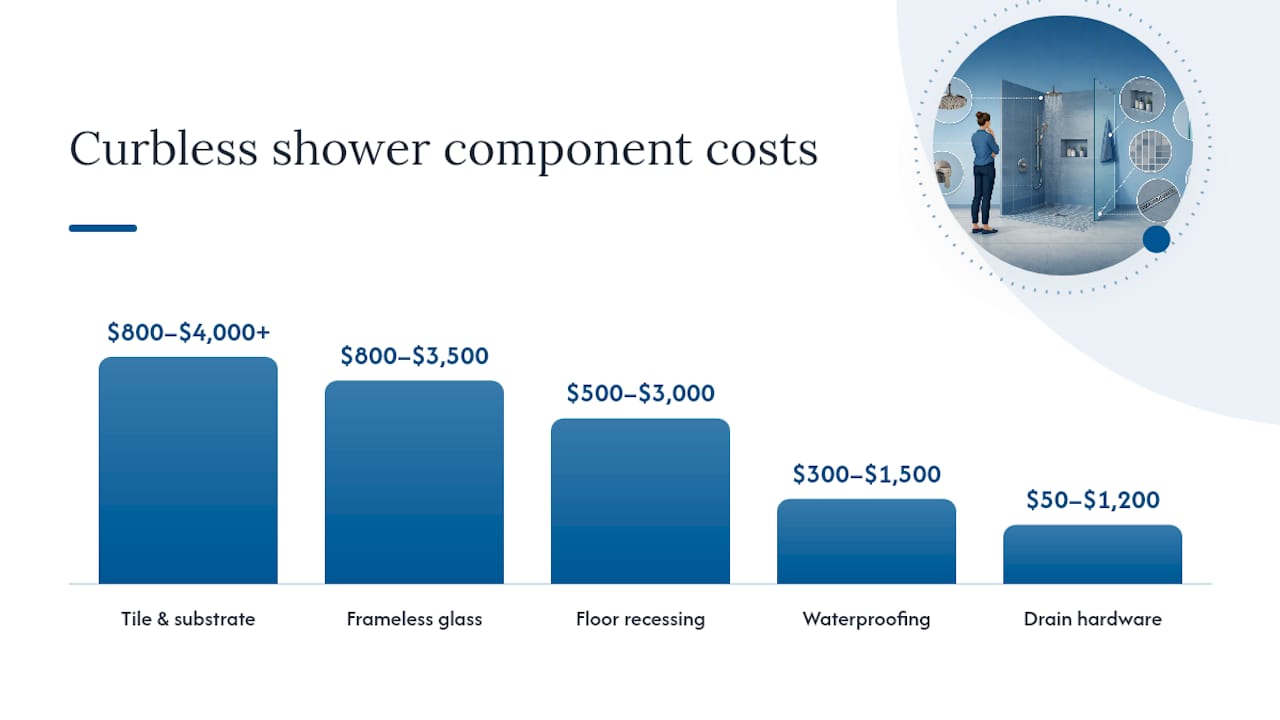
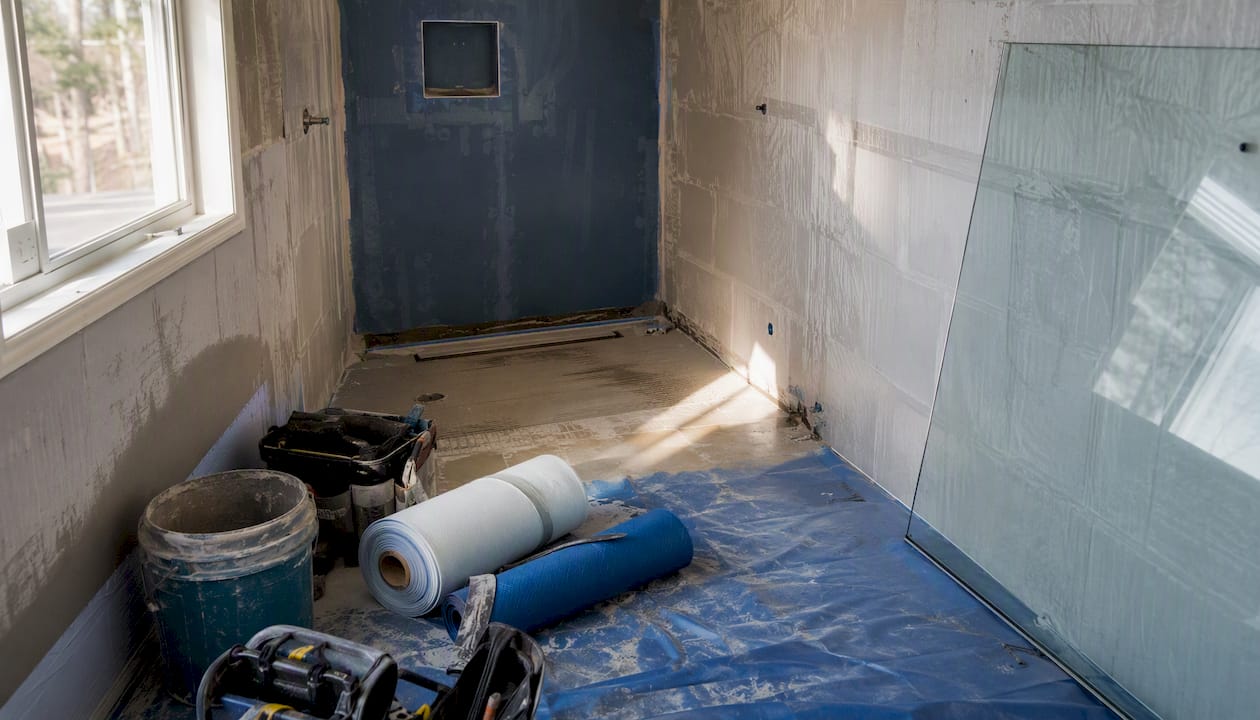
The drain and waterproofing line items deserve special attention. A linear drain is the most visible curbless feature, but the hardware is only part of the cost. The plumbing rough-in, the substrate work to create a single-plane slope toward that drain, and the extended waterproofing membrane together can add $800–$5,000 to a project before a single tile goes down. Choosing a center point drain instead of a linear drain cuts hardware cost but doesn’t eliminate the slope work.
Waterproofing is the line item homeowners most often try to trim — and the one that causes the most expensive callbacks. Systems like Schluter Kerdi, Wedi board, or a properly applied liquid membrane cost $300–$1,500 in materials, but the labor to install them correctly is what separates a shower that lasts 20 years from one that leaks into the subfloor within three.
Pro Tip: Ask every contractor to specify the waterproofing system by brand and product name in the written quote. “Waterproofing included” with no further detail is not a specification — it’s a placeholder that lets a crew use whatever’s cheapest on the day.
The Spruce reports that curbless-specific components generally add to project costs, with many standard installations falling within a broad range. Those figures align with what most Long Island homeowners see in practice.
What do low-, mid-, and high-end curbless shower projects actually cost?
Three budget tiers cover the realistic range for most homeowners. The table below maps each tier to its typical inclusions and installed price band.
Tier | Typical Inclusions | Installed Price Range |
Basic / prefab | Prefab pan or kit, point drain, standard tile, basic glass door | $5,000–$8,000 |
Mid-range custom | Custom tile, linear drain, Kerdi or Wedi waterproofing, semi-frameless glass | $10,000–$15,000 |
Luxury / spa-style | Large-format or natural stone tile, designer linear drain, frameless glass, heated floor, relocated plumbing | $18,000–$35,000+ |
Basic tier ($5,000–$8,000). A prefab curbless pan with a point drain, a standard 3x6 subway tile surround, and a basic hinged glass door. The floor recess is minimal or handled with a pre-sloped insert. Labor is straightforward because the substrate work is limited. This tier works well for a secondary bathroom where function matters more than aesthetics.
Mid-range custom ($10,000–$15,000). This is where most homeowners land. Custom tile, a linear drain along one wall, a proper Schluter or Wedi waterproofing system, and a semi-frameless glass enclosure. The floor is recessed or the drain is repositioned. Expect two to three weeks of active work. A contractor line-item quote at this tier might look like: demo and disposal $400, plumbing rough-in $900, floor recess and substrate $1,200, waterproofing $800, tile and setting materials $2,500, glass $1,400, labor $3,500.
Luxury / spa-style ($18,000–$35,000+). Large-format porcelain or natural stone, a designer linear drain (Schluter Kerdi-Line or similar), a fully frameless glass enclosure, in-floor radiant heat, and often a relocated drain that requires opening the slab or reconfiguring joists. Regional contractor data from New Jersey shows installed ranges of $12,000–$25,000+ for projects at this scope, with the premium over a curbed shower often reaching $3,000–$8,000 when floor and waterproofing work are involved.
What specifically makes curbless showers more expensive?
A curbed shower uses the curb itself as the waterproofing boundary. Remove that curb and every cost driver multiplies. Here’s where the money actually goes:
Floor recessing or slab modification. The shower floor must slope toward the drain without a curb to contain water. On a wood-framed floor, joists may need to be notched or sistered. On a concrete slab, grinding or build-up work is required. This alone can add $500–$3,000.
Extended waterproofing. Without a curb, the waterproofing membrane has to extend further onto the bathroom floor and up the walls. More square footage of membrane means more material and more labor.
Linear drain hardware and plumbing. A linear drain runs along one wall and requires a single-plane slope rather than a four-way slope. The hardware costs $200–$1,200, and repositioning the drain from the center of the floor to a wall can add $400–$2,500 in plumbing work.
Precise slope and tile labor. Achieving a consistent 1/4-inch-per-foot slope across a custom tile floor takes a skilled setter significantly longer than standard tile work. That skill premium shows up in labor rates.
Glass enclosures. A frameless glass panel or enclosure is almost always part of a curbless design. Frameless glass runs $800–$3,500 depending on size and hardware.
ADA-compliant features. Grab bars, fold-down benches, and wider entry openings (ADA requires at least 36 inches) add $200–$1,500 in materials and labor.
Angi notes that extra labor for floor recessing and extended waterproofing can significantly increase costs depending on project scope. Hidden costs homeowners frequently miss include permit fees ($100–$500 in most Long Island municipalities), debris disposal ($150–$400), and substrate repair when demo reveals rot or damage. Regional labor rates matter too: a Los Angeles contractor converting to barrier-free typically adds $3,000–$6,000 over a curbed shower, while older homes in the Northeast often face additional subfloor and permitting costs that push that premium higher.
Are curbless showers worth the extra cost?
The honest answer depends on why you’re installing one. Here are the real pros and cons:
Benefits:
Accessibility. A zero-threshold entry is the single most effective bathroom modification for aging in place or wheelchair access. Coastal Home Renovations offers ADA home modifications specifically for homeowners planning long-term accessibility upgrades.
Easier cleaning. No curb means no grout line collecting mildew at the base. The floor sweeps clean in one pass.
Visual spaciousness. The continuous floor plane makes a small bathroom feel larger, especially with large-format tile carried from the shower to the main floor.
Buyer appeal. Curbless showers read as a premium feature to most buyers, particularly in the 55+ demographic and in higher-end markets.
Tradeoffs:
Water spread. Without a curb, water can migrate onto the bathroom floor if the slope is even slightly off or if the showerhead is positioned poorly. A good slope and a quality squeegee habit solve most of this.
Cold floors. The open design means the shower area doesn’t retain heat the way an enclosed curbed shower does. Radiant floor heat addresses this but adds $500–$2,000 to the project.
Higher upfront cost. The $3,000–$8,000 premium is real and not always fully recovered in resale value in every market.
Contractor skill dependency. A curbless shower installed with poor slope or inadequate waterproofing will fail. The quality of the install matters more here than in almost any other bathroom project.
Pro Tip: If accessibility is the primary driver, the premium is almost always justified. If it’s purely aesthetic, run the numbers against your local resale market before committing to the luxury tier.
When it comes to bathroom doors and enclosure choices for a curbless layout, the door type affects both the feel and the water containment. Interior bathroom door options range from pivot panels to sliding barn-style glass, each with different implications for how water stays contained in an open curbless design.
What should you ask contractors before hiring for a curbless shower?
You’ll need at least two trades on a curbless project: a licensed plumber for drain work and a skilled tile installer with documented waterproofing experience. If the floor requires structural changes, a general contractor or structural carpenter joins the team. For ADA projects, verify the GC understands NKBA accessibility standards.
Before signing anything, ask every contractor these questions:
What waterproofing system will you use, and can you specify it by product name and manufacturer?
Will the floor be recessed, or will you use a build-up method? What’s the substrate plan?
Where is the drain going, and does it require moving the existing rough-in?
Is the quote line-itemized, or is it a lump sum?
Does the price include permits, demo, disposal, and inspection fees?
What is the warranty on waterproofing and tile work, and is it in writing?
What is the realistic project timeline, and what causes delays on your end?
Red flags to watch for in quotes:
“Waterproofing included” with no product name or system specified
A fixed price quoted without a site inspection or subfloor assessment
No mention of permits when structural or plumbing work is involved
Subfloor work listed as a single line item with no scope description
A quote significantly below others with no explanation of what’s excluded
Pro Tip: Always request a line-item quote, not a lump sum. A lump sum makes it nearly impossible to compare bids or identify what gets cut when a contractor needs to trim margin.
Insist that the contract specifies the waterproofing product, drain brand and model, tile setting method (thin-set type and coverage), and the slope specification (typically 1/4 inch per linear foot). These details protect you if there’s a dispute about workmanship later.
How long does a curbless shower installation take?
A realistic timeline for a mid-range curbless shower runs two to four weeks from demo to final inspection. Here’s how the phases break down:
Demo and removal (1–2 days). Existing shower, curb, and sometimes subfloor sections are removed. This is when hidden damage (rot, mold, failed waterproofing) gets discovered — and when timelines slip.
Plumbing and drain rough-in (1–3 days). The drain is repositioned if needed, new supply lines are run, and the rough-in is inspected. A drain relocation that requires opening a concrete slab can add 2–3 days.
Structural and subfloor work (1–4 days). Joists are notched or sistered for recessing, or the slab is ground and prepared. Older homes on Long Island frequently need more work here than initial estimates assume.
Waterproofing (1–2 days, plus cure time). Membrane installation and any required cure time before tile can begin. Rushing this step is the most common cause of long-term failure.
Tile installation (2–5 days). Setting, grouting, and sealing. Large-format tile or natural stone takes longer. The slope work adds time compared to a standard shower floor.
Glass and fixtures (1–2 days). Frameless glass is typically templated after tile is complete and fabricated off-site, which can add 5–10 business days of lead time to the schedule.
Final inspection and punch list (1–2 days). Municipal inspection if permits were pulled, plus any touch-ups.
The most common delay is discovering subfloor damage during demo. A Northern Virginia contractor guide notes that older homes regularly need subfloor changes and permits that weren’t anticipated in the original scope. Budget a one-week buffer into any timeline you’re given.
What maintenance does a curbless shower require?
Curbless showers aren’t high-maintenance, but they do require consistent attention in a few specific areas.
Routine maintenance schedule:
Grout sealing: Reseal grout lines every 12–18 months with a penetrating sealer. Unsealed grout in a curbless floor absorbs water and deteriorates faster because the floor stays wet longer than a curbed shower.
Drain cleaning: Clear the linear drain cover and trap monthly. Linear drains catch more debris than center drains because water travels further across the floor before reaching them.
Silicone caulk inspection: Check the caulk at wall-to-floor transitions every six months. Cracked or missing caulk at these joints is the most common entry point for water behind the tile.
Slope check: Once a year, pour a cup of water at the far corner of the shower and watch where it goes. Water that pools instead of draining within 30 seconds indicates a slope problem worth addressing before it becomes a leak.
Common issues and when to call a contractor:
Pooling water usually means the slope is off by more than 1/8 inch per foot. A tile installer can sometimes correct minor pooling by regrading the surface with a skim coat, but significant pooling often requires retiling.
Grout deterioration at the floor is almost always a waterproofing or slope issue underneath, not just a grout quality problem. If grout is crumbling within two years of installation, the substrate is getting wet.
Water on the bathroom floor after every shower suggests either a slope problem or a showerhead aimed too directly at the open entry. Repositioning the showerhead is the first fix to try.
Get the waterproofing warranty and the workmanship warranty in writing before the contractor leaves the job. A reputable installer will warrant waterproofing for at least five years; some offer ten.
How can you reduce the cost of a curbless shower?
The biggest savings come from decisions made before demo starts, not from negotiating labor rates after the fact.
Use a prefab curbless pan. A pre-sloped acrylic or solid-surface pan eliminates most of the floor recessing and slope labor. You lose the custom tile look but can save $1,500–$3,000 on substrate and setting work. The curbless upgrade itself often adds only $800–$2,500 over a standard curbed shower when a prefab pan is used.
Keep the drain in place. Relocating a drain is one of the most expensive single decisions in a curbless project. If your existing drain position can work with a linear drain or a re-sloped floor, staying put saves $400–$2,500 in plumbing costs.
Choose porcelain over natural stone. Porcelain tile in a 12x24 or 24x24 format gives a clean, modern look at a fraction of the cost of marble or travertine. It’s also more forgiving in wet environments.
Go semi-frameless instead of fully frameless. A semi-frameless glass enclosure with a minimal frame at the top and bottom costs $400–$1,000 less than a fully frameless panel and is structurally more forgiving.
Limit the shower footprint. A 36x48-inch curbless shower costs significantly less to tile, waterproof, and glass-enclose than a 60x36-inch or larger wet-room design. Every additional square foot adds tile, membrane, and labor.
Shop the drain hardware separately. Contractor-supplied linear drains often carry a markup. Purchasing a Schluter Kerdi-Line or similar drain directly and supplying it to the contractor can save $100–$400 on hardware.
The one place not to cut: waterproofing. A $300 savings on membrane materials can turn into a $5,000–$15,000 water damage repair within a few years. Spend the money on a named system installed by someone who knows it.
How Coastal Home Renovations estimates curbless showers in Suffolk County
Coastal Home Renovations has handled bathroom remodeling in Suffolk County for over 20 years, and curbless shower projects follow a consistent estimation process that removes the guesswork homeowners often face with vague contractor quotes.
The Coastal estimation process:
Onsite inspection first. Every estimate starts with a site visit to assess the existing subfloor, joist depth, drain location, and tile condition. No quote is issued without seeing the actual substrate.
Substrate assessment. The crew checks for rot, prior water damage, and joist clearance before any numbers are discussed. Hidden damage found during demo is documented and priced separately, not absorbed into a lump sum.
Drain decision. Linear vs. point drain is decided based on the floor layout and the homeowner’s aesthetic preference, with honest cost comparisons for each option.
Waterproofing system specified by name. Coastal specifies the waterproofing product in writing — typically Schluter Kerdi or a comparable named system — before the contract is signed.
Line-item quote. Every Coastal quote breaks out demo, plumbing, substrate, waterproofing, tile, glass, and labor as separate line items. Homeowners can see exactly what they’re paying for and compare it against other bids.
Local Suffolk County curbless projects at Coastal typically fall in the $10,000–$18,000 range for a mid-range custom install, with basic prefab-pan projects starting near $7,000 and luxury spa-style projects priced on scope. Permits, when required, are pulled by Coastal and included in the project management scope.
Coastal Home Renovations provides written warranties on waterproofing and tile workmanship, a detailed project timeline before work begins, and a single point of contact throughout the project. Homeowners in Suffolk County working with Coastal know the waterproofing system by name, the drain brand and model, and the total cost before demo starts.
Browse the completed project gallery to see finished curbless showers and get a sense of the materials and finishes Coastal delivers at each price point.
What most homeowners get wrong about curbless shower budgets
The number one mistake is treating the curbless premium as a fixed add-on rather than a variable that depends entirely on what’s under the existing floor. A homeowner who gets a $12,000 quote and a $7,500 quote for the same project almost always assumes the lower number is the better deal. It usually isn’t. The lower quote is typically missing the substrate assessment, the named waterproofing system, or the permit fees — costs that don’t disappear, they just show up as change orders after demo.
The second mistake is optimizing for tile and glass while underinvesting in slope and waterproofing. The tile is what you see. The slope and membrane are what determine whether the shower is still functional in ten years. A $500 upgrade from a basic liquid membrane to a Schluter Kerdi system is one of the highest-return decisions in a bathroom remodel. A $500 upgrade from standard porcelain to a designer stone tile is purely aesthetic.
The third thing worth saying plainly: curbless showers are genuinely worth the premium for most homeowners who plan to stay in their home for more than five years. The accessibility benefit alone justifies the cost for anyone over 50 or living with a mobility consideration. And for resale, a well-executed curbless shower in a primary bathroom reads as a premium feature to buyers in nearly every Long Island market segment.
Ready to get a real quote for your curbless shower in Suffolk County?
Coastal Home Renovations gives Suffolk County homeowners something most contractors don’t: a line-item estimate based on an actual site inspection, not a ballpark figure over the phone. You’ll know the waterproofing system, the drain type, the tile scope, and the total cost before a single tool touches your bathroom.
Coastal handles permits, coordinates all trades, and backs the work with written warranties on waterproofing and craftsmanship. Whether you’re planning a basic prefab-pan install or a full spa-style wet room, the process starts with a no-pressure onsite consultation.
Request a bathroom remodeling consultation with Coastal Home Renovations today, or explore the interior renovation services page if your project extends beyond the bathroom.
Sources
Recommended
Comments